
Wings on a windowsill usually mean a mature drywood termite colony nearby sent out swarmers to start new colonies. While the swarm itself does no structural damage, the colony it came from may already be living inside your walls, furniture, or attic wood. In Los Angeles County, finding those wings is a signal worth taking seriously, and acting quickly can limit how far the damage spreads.
What Is a Drywood Termite Swarm?
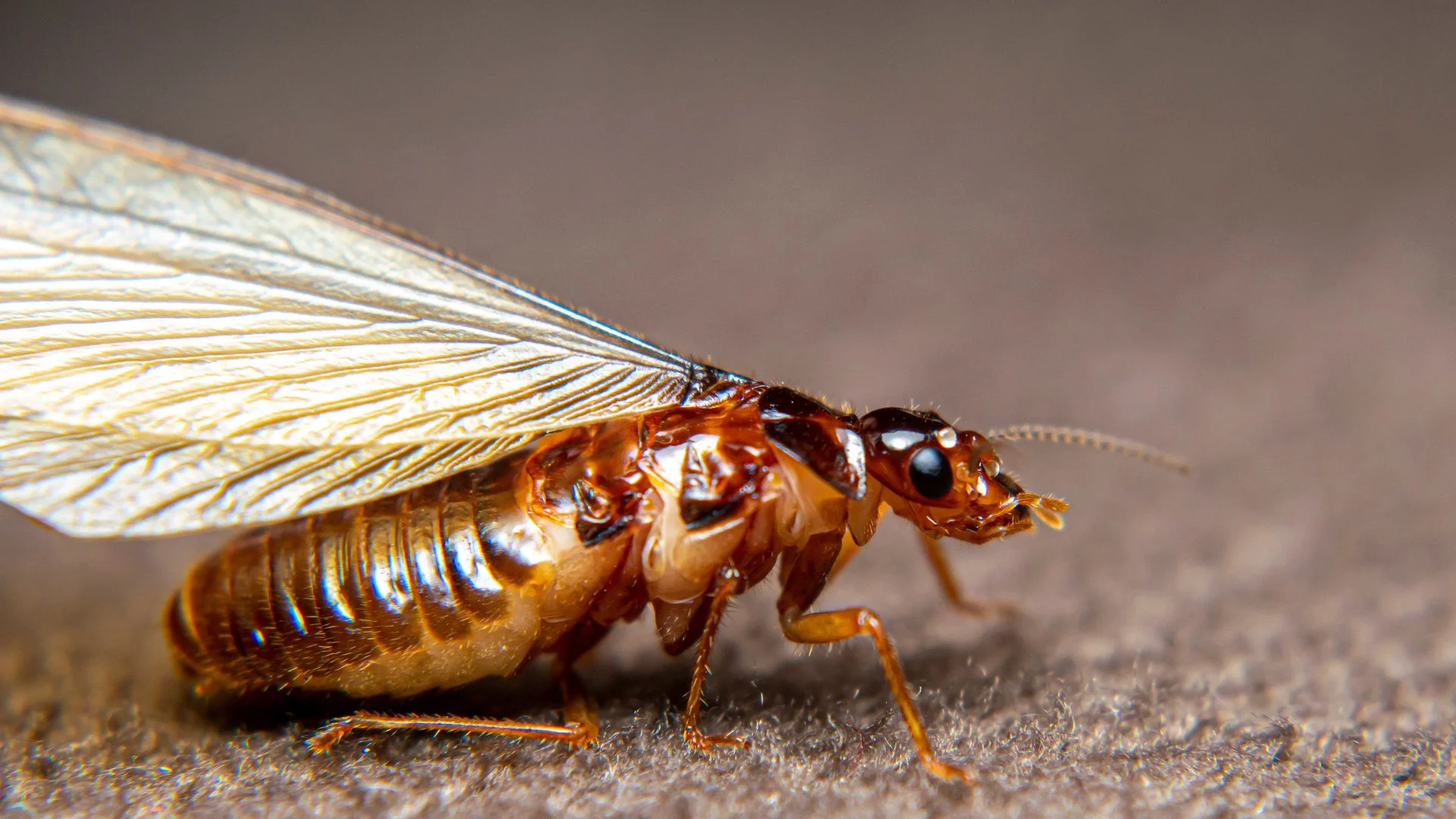
Seeing winged swarmers like this indoors often means drywood termites are already nesting in the wood.
A drywood termite swarm is a reproductive event. When a colony matures, it produces winged termites called alates. These alates fly out of the colony to mate and start a new nest. Once they land, they shed their wings and begin building. The pile of small, translucent wings you find near a window or door is left behind after that shedding.
The swarmers themselves don't chew your wood. Their only job is reproduction. The damage comes from the established colony, which may have been quietly hollowing out wood inside your home for months or longer before sending out those swarmers.
When Do Termites Swarm in Southern California?
In California, drywood termites swarm from late summer into fall, roughly August through October. If you find wings or swarmers in Los Angeles County in November or later, you may be seeing the tail end of the season, or a recent swarm that went unnoticed until now.
Swarmers are drawn to light, which is why they so often turn up at windows, light fixtures, and doorways. If you find them indoors near a window rather than on an outside ledge, that matters and is worth discussing with a professional inspector.
What Do the Wings Actually Tell You?
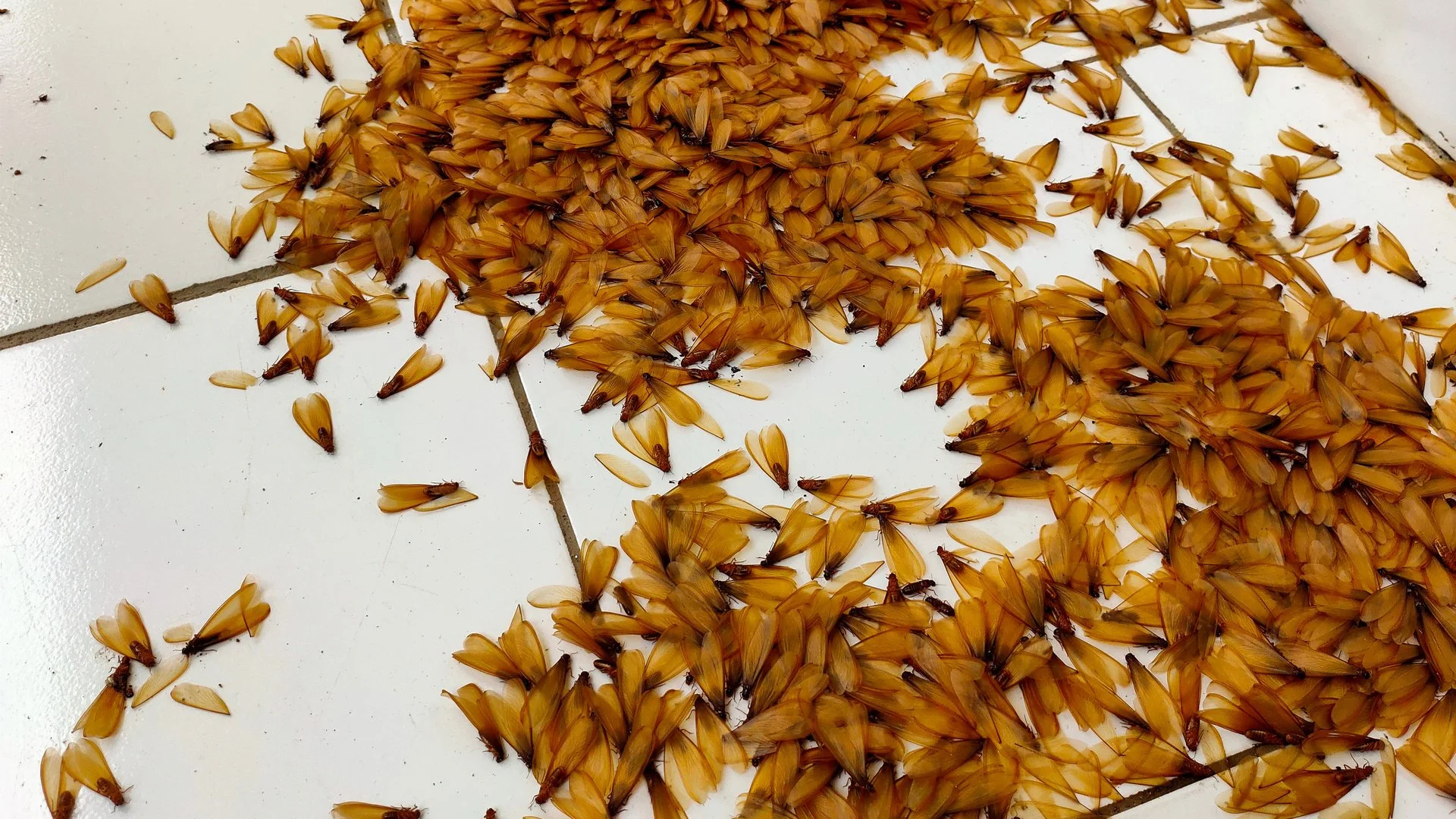
Finding piles of discarded wings like these near windows or doors is one of the clearest signs termites have swarmed inside.
If you find wings without any bodies, the swarm already happened, possibly while you were away or asleep. The swarmers mated, dropped their wings, and moved on to start new colonies. That pile of wings is still useful evidence. It tells you where the swarm originated and gives an inspector a starting point.
Discarded termite wings are translucent and roughly uniform in size, since both pairs are equal in length. If you are not sure whether the wings are from termites or ants, here is how to tell them apart.
Also check near the wings for frass, small wood-colored pellets that look like fine sawdust or grains of sand, and tiny kick-out holes in wood surfaces. These nearby signs can help confirm the colony's location. For a deeper look at what to watch for, see our guide to signs of termite damage.
What Should You Do Right Now?
Before you reach for the bug spray, stop. Spraying swarmers with household insecticide does not reach the colony inside the wood. It may kill the swarmers you can see, but it removes the evidence an inspector needs and does nothing about the source of the problem.
Instead, collect a few wings or swarmers in a sealed plastic bag, or press them onto a piece of tape. Write down where you found them, the date, and which direction the window or fixture faces. If you see frass piles or small holes in nearby wood, photograph those too. This information helps an inspector pinpoint where the colony is likely located.
Why Is a WDO Inspection the Right Next Step?
A WDO inspection, short for Wood-Destroying Organism inspection, is a professional examination of your home conducted by a licensed inspector. An inspector checks wooden support beams, rafters, wall studs, furniture, attic wood, and other vulnerable areas you may not see during a casual walk-through.
Because drywood termites hollow out wood from the inside, a beam or wall can look completely normal on the outside while significant damage is already present underneath. A trained inspector knows where to look and what to tap, probe, and examine.
Getting a WDO inspection promptly after a swarm gives you an accurate picture of what you are dealing with before the situation worsens. Learn more about what to expect from a WDO inspection.
What Happens After the Inspection?
Treatment options depend on how far the colony has spread and which areas of the home are affected. A small, localized infestation calls for a different approach than one that has moved through multiple structural members. Your inspector will outline what they found and recommend the treatment that best fits your situation.
To understand the treatment options available for drywood termites, read about the best drywood termite treatment.
What is clear is that waiting makes the situation harder and more costly to address. Drywood termites can go undetected for a long time because they stay hidden inside wood. A swarm event is one of the few visible clues a homeowner gets, and acting quickly is the best way to limit damage.
-
Fumigation duration and preparation steps vary depending on the structure and the pest control company's requirements. A technician will advise you on the timeline and what to do before and after treatment.
-
It depends on the method. Whole-structure fumigation requires everyone, including pets, to vacate. Spot treatments and localized heat treatments often require less or no displacement, but a technician will confirm based on the product and area being treated.
-
A WDO inspection may be part of the home sale process in California. Getting an inspection early gives sellers more options and time to address any findings before closing.
-
Drywood termites tend to cause damage more slowly because their colonies are smaller. However, their ability to burrow deep into wood makes them harder to detect, so damage can continue for a long time before anyone notices it.
Found frass or wings in your Los Angeles County home? ProCraft Pest Control has been helping Southern California homeowners protect their properties since 2009. Give us a call at (626) 681-4120 or contact us to get started.
