
How to Identify Wasps in Southern California: Tips for Safety
The four wasps you're most likely to see in Southern California are yellow jackets, paper wasps, mud daubers, and bald-faced hornets. Yellow jackets are the most aggressive and usually build inside enclosed spaces like walls or underground. Paper wasps build the open umbrella-shaped nests under roof overhangs. Mud daubers are nearly harmless and leave small mud tubes on walls or ceilings. Nest location and body color are the quickest way to tell them apart.
Telling California Wasps Apart
Seeing wasps around the yard in summer is normal in Southern California. What matters more than most homeowners realize is knowing which kind. Yellow jackets behave very differently from paper wasps. Mud daubers are barely worth worrying about. Bald-faced hornets are a different problem entirely. Telling them apart takes about ten seconds once you know what to look for, and it changes how you respond.
What Makes a Wasp a Wasp
Knowing what you're looking at changes what you do next. Wasps and bees are easier to tell apart than most people think once you know what to look for.
How to Tell Wasps Apart from Bees
The mix-up between wasps and bees is common, and it matters because their behavior and treatment are different. Wasps have slender bodies with a visible narrow waist between the chest and abdomen. The surface is smooth and shiny. Bees are stockier, rounder, and covered in fine hairs that help them carry pollen.
Wings give it away at rest. A wasp folds its wings flat along its body when it lands. Bees don't do that; their wings stay out at a slight angle.
Behavior is the other tell. Bees move between flowers with clear purpose. Wasps hover more erratically, and certain species (yellow jackets in particular) will show aggressive interest in open food, drinks, or anything with a strong odor. If something landed on your food and won't leave, it's almost certainly a yellow jacket.
If what's hovering nearby turns out to be bees rather than wasps, the removal approach changes, since disturbing an active hive can trigger a defensive swarm.
The Four Species You Will See Most
Four species show up consistently in Southern California yards and homes. They differ in color, nesting style, and how aggressively they respond when disturbed.
A Side-by-Side Look at Each One
These are the California wasp species you're likely to encounter in an Inland Empire yard:
Yellow Jacket
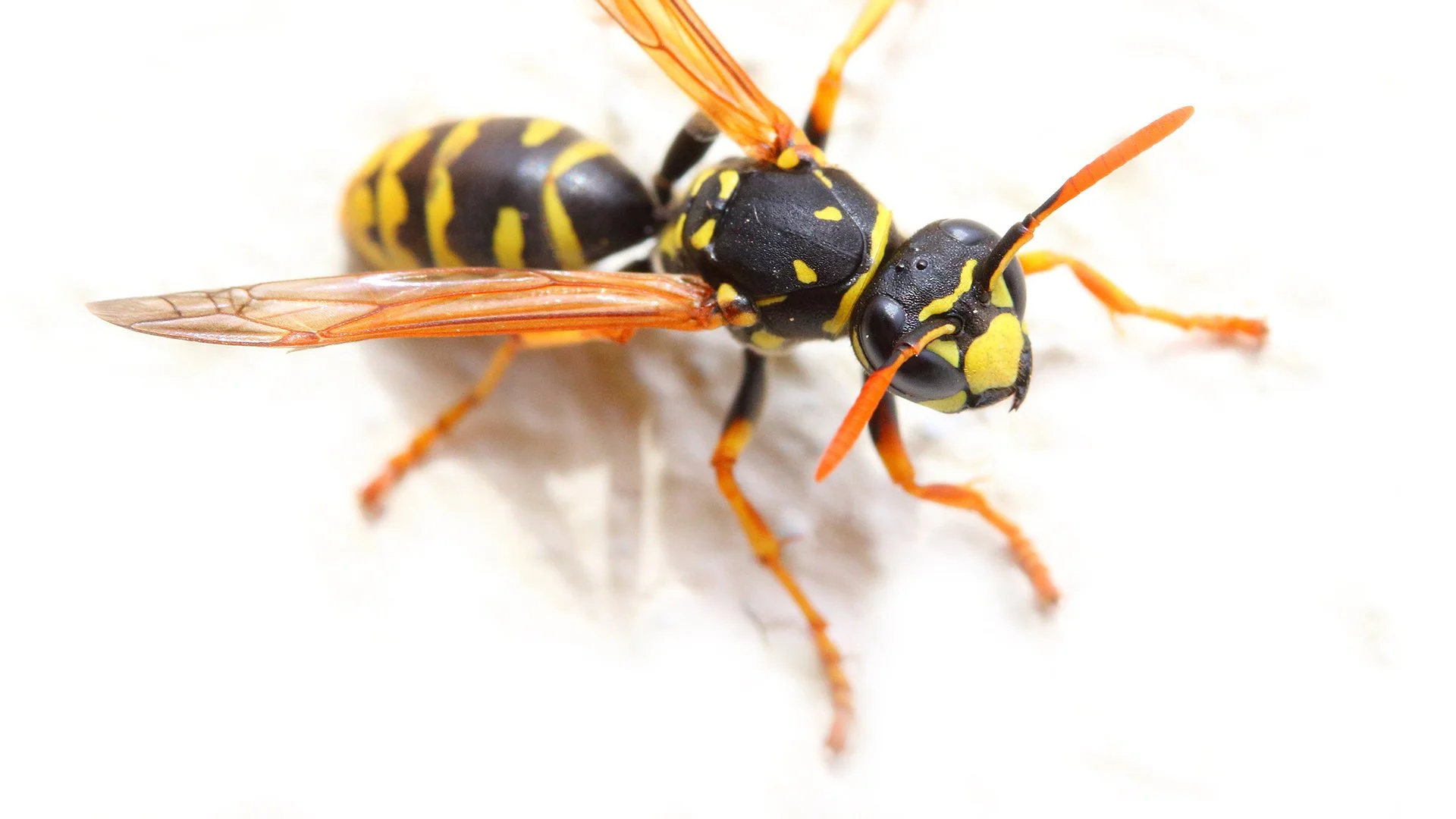
• Color: Black and yellow
• Nest type: Enclosed, underground or in wall voids
• Aggression: High
Paper Wasp
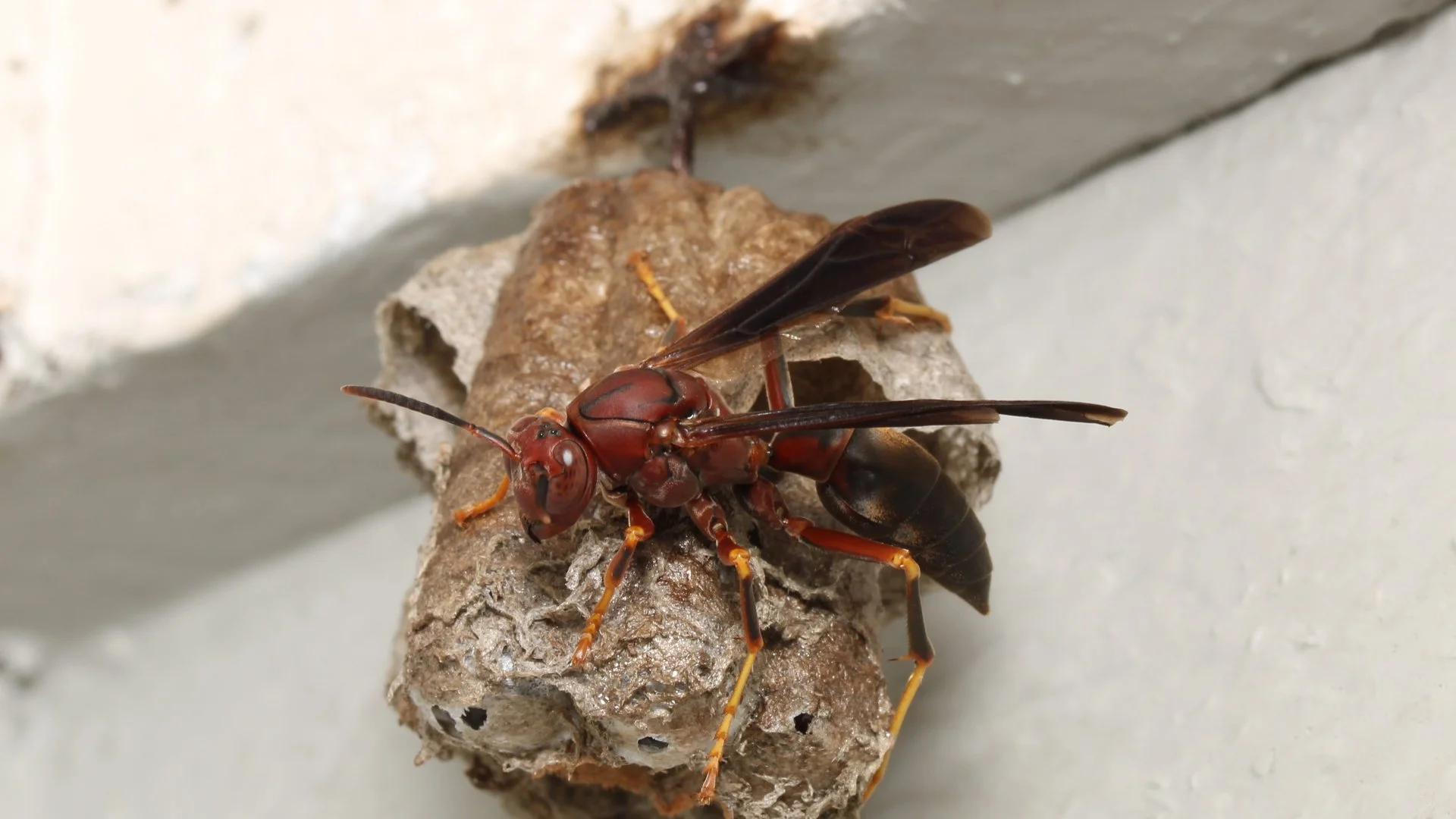
• Color: Brown with yellow or red
• Nest type: Open, umbrella-shaped, under eaves
• Aggression: Moderate
Mud Dauber
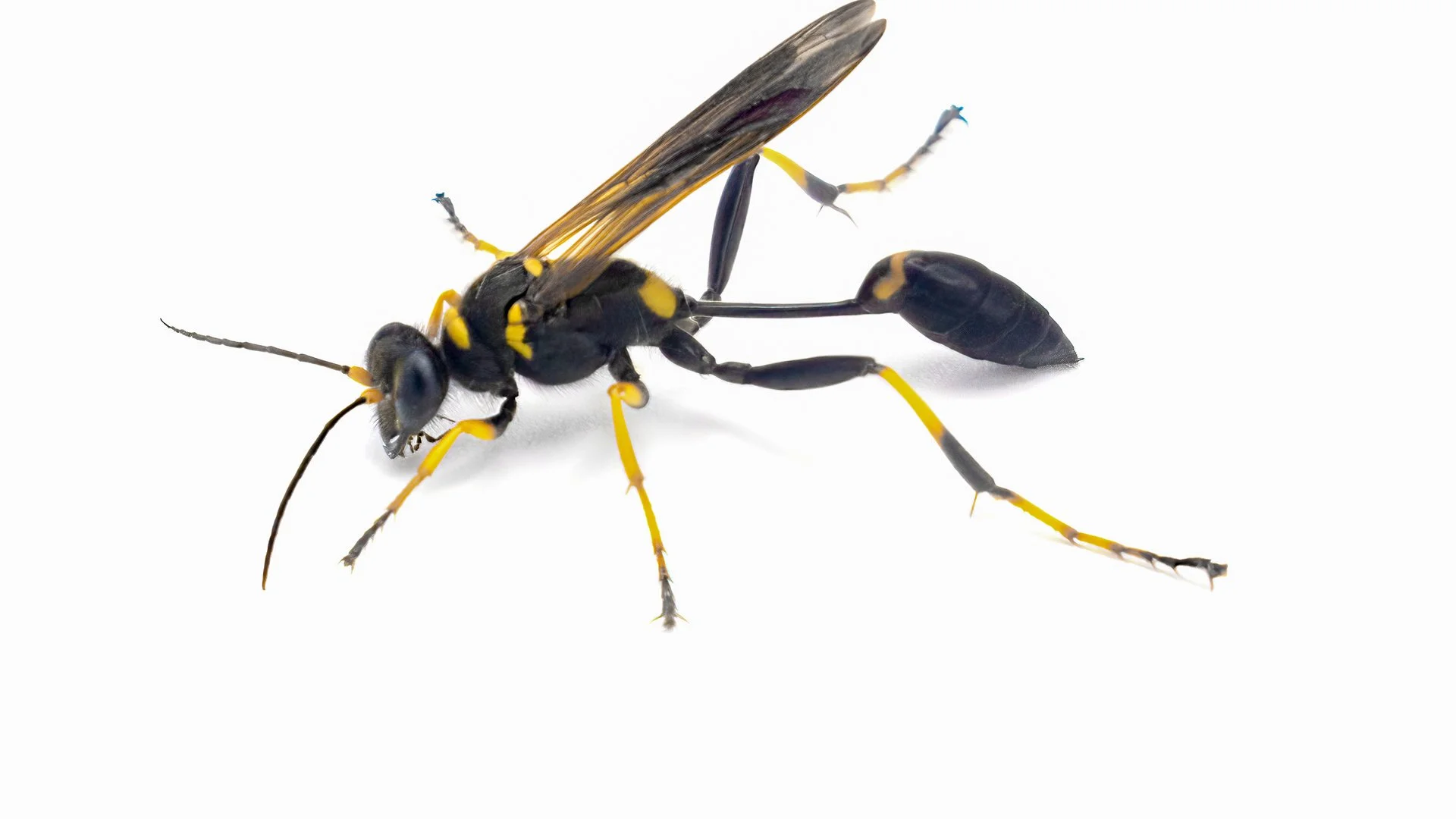
• Color: Black or metallic blue-black
• Nest type: Mud tubes on walls or ceilings
• Aggression: Very low
Bald-Faced Hornet
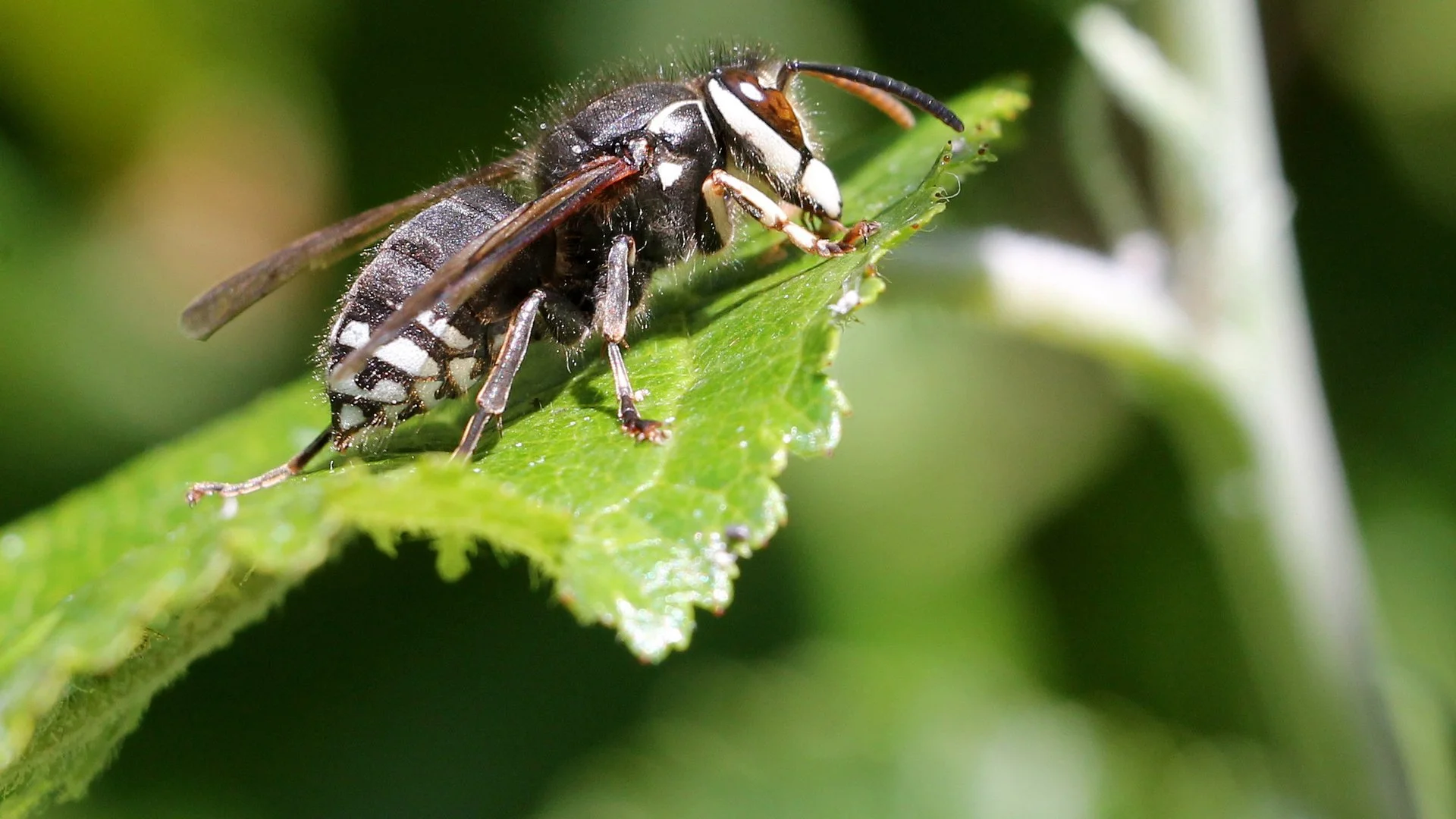
• Color: Black and white
• Nest type: Large enclosed paper nest in trees
• Aggression: High
Yellow jackets are behind most wasp-related incidents in Southern California. They're territorial, they don't lose their stinger, and a disturbed colony will pursue. Late summer is peak trouble; colonies reach full size and wasps coming out of the nest get more aggressive as temperatures hold. The sting is sharp and they'll sting repeatedly.
Paper wasps are less of a threat but still defend their nests. The open umbrella-shaped nests under eaves (the overhang at the edge of your roofline), along fence lines, or on porch ceilings are easy to spot. A paper wasp nest found early in the season (just a queen and a few cells) is manageable. One left through July can be a full working colony by August.
Mud daubers are almost entirely non-aggressive. They're solitary wasps that hunt and paralyze spiders rather than living in social colonies, so there's no colony to defend. The main concern is cosmetic: the mud tubes they leave on exterior walls and ceilings. The wasp itself is not a threat.
Bald-faced hornets are technically a yellow jacket sub-type, but they look and behave differently enough to note separately. The black-and-white coloring and large enclosed paper nest, often hanging from a tree or eave, make them easy to identify. They're aggressive defenders, and the sting causes more local swelling and pain than a standard yellow jacket.
Where California Wasps Build Their Nests
Finding the nest is usually the first step toward understanding what you're dealing with. Each species has a distinct preference for where and how it builds.
Nest Location by Species
The nest location is usually the quickest way to figure out what you're dealing with before you even see the wasp clearly.
Yellow jackets build inside enclosed spaces: underground in old rodent burrows, inside wall voids (the hollow spaces between your inner and outer walls), or deep in thick shrubs. You'll often hear buzzing near a gap in the siding or a hole in the ground before you find the entrance. Colonies inside wall voids can hold thousands of workers by late summer and are difficult to treat without professional help.
Paper wasp nests are open and visible. The papery material comes from chewed wood fiber and dried saliva. A single queen starts building in spring and the nest grows steadily through the warm months. Eaves, porch ceilings, window frames, and low tree branches are common attachment points.
Mud dauber tubes are small and scattered. Each tube holds one paralyzed spider as food for a single larva (a young, developing wasp). Old, hardened tubes on a wall usually mean the wasp has already moved on.
For a deeper look at what makes yellow jackets specifically dangerous to deal with near the home, our post on yellow jacket risks in Southern California covers what to know before approaching a nest.
When Wasp Activity Becomes a Problem
Not every wasp near the house requires action. The line between routine activity and a real problem comes down to a few specific signs.
Signs That a Nest Is Established
An occasional wasp flying through the yard is not a concern. The situation that needs attention is consistent activity near one spot, particularly when that spot is close to a door, a play area, or anything your family uses regularly.
Things worth paying attention to:
• Wasps flying in and out of the same gap in the ground, siding, or a roof overhang repeatedly
• A visible nest that was small two weeks ago and is now noticeably larger
• Live wasps appearing inside the house, which can mean a nest in a wall void
• Repeated stinging incidents near the same area of the yard, especially in late summer
Yellow jacket nests inside wall voids are the situation that escalates fastest. What enters the structure as a small colony in spring can grow to several thousand wasps by August. At that scale, the nest is built into the wall void and removal without professional help creates more problems than it solves.
We'll have a full action guide on what to do once you've found a wasp nest near your home coming in August. If you can't wait, give us a call and we can walk you through it.
Seeing Wasps Near Your Home? Call ProCraft
Once a colony is through mid-summer, it gets harder to deal with. We handle yellow jackets, paper wasps, bald-faced hornets, and mud daubers throughout the Inland Empire and East San Gabriel Valley. Free estimates, quick response — get in touch with ProCraft Pest Control or call us at (626) 681-4120.
We serve:
• Covina
• Upland
• Walnut
• Arcadia
• Ontario
• Alhambra
• Glendora
• Monrovia
• Pasadena
• Chino Hills
• La Verne
